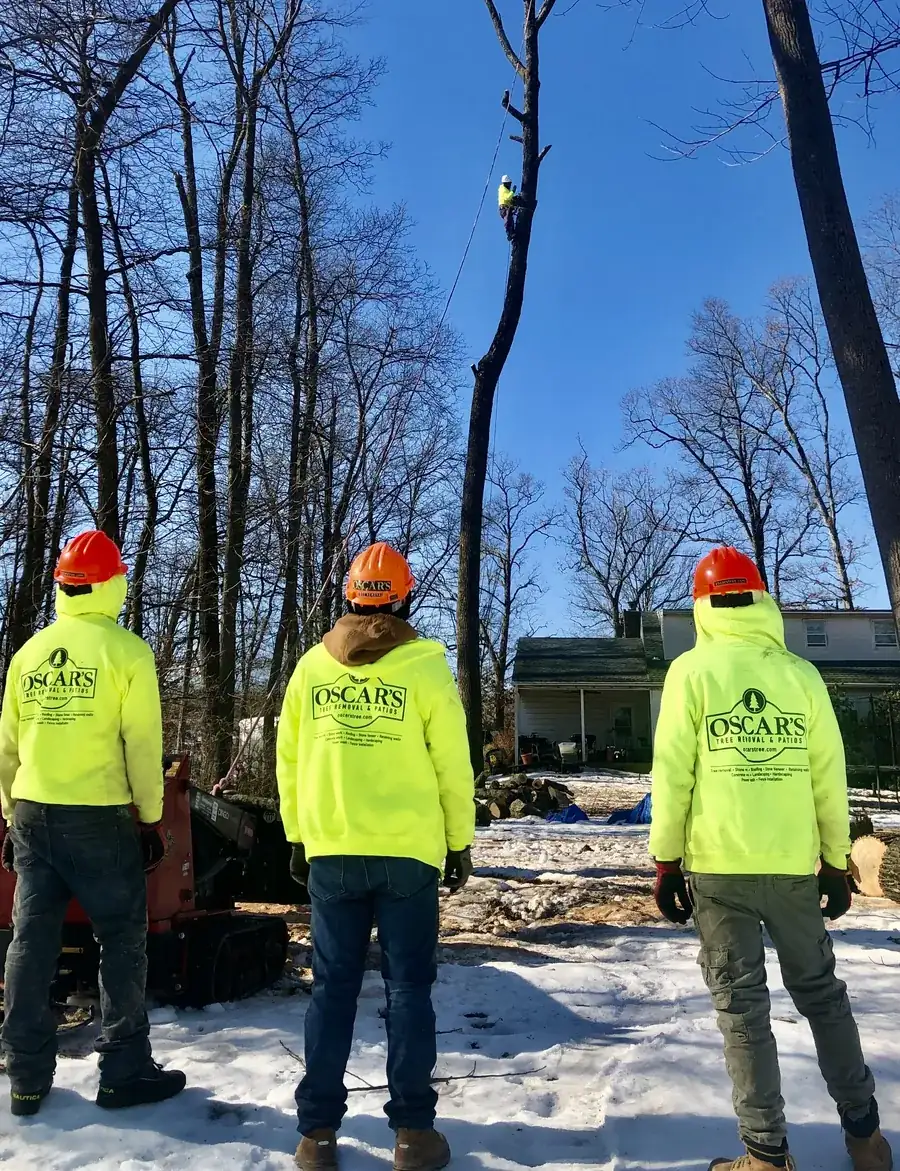
Get everyone away from the tree and out of the damaged part of the house. If anyone is hurt, or the tree is touching a power line, or you smell gas, call 911 first and stay 35+ feet back. Once people are safe, take photos and video, then call a licensed, insured emergency tree service. Call your insurer after the scene is documented. Oscar's answers 24/7 at (267) 245-5320.
A tree through the roof is one of the most stressful things a storm can do to a home, and the Bucks County storms this season have put a lot of homeowners in exactly that spot. The instinct is to grab a chainsaw and start cutting. Don't. What you do in the first hour protects your family, your insurance claim, and the people who come to help. Here is the right order.
The First 6 Things to Do
- Get everyone clear. Move people and pets out of the rooms under or near the impact, and out of the house entirely if the structure is compromised. A partially fallen tree can shift or drop more weight without warning.
- Check for power lines and gas. If the tree is touching, near, or tangled in a line, or if you smell gas, call 911 and your utility immediately and stay at least 35 feet away. Treat every downed line as live. A tree service cannot legally or safely touch a tree on a live line until the utility de-energizes it.
- Stay off the tree and the roof. Do not climb on the tree, go up on the damaged roof, or crawl underneath to look. Storm-loaded wood is under tension and can spring or roll.
- Document everything before anything moves. Photos and video of the tree on the house, the damage from several angles, any water coming in, and the base of the tree. This is what your insurance claim is built on.
- Call a licensed, insured emergency tree service. They can stabilize the tree, tarp the opening to stop water damage, and remove the tree safely with the right rigging and lift equipment. Ask for proof of insurance.
- Then call your insurer. Open the claim once the property is safe and documented. Keep every receipt, including emergency tarping and any hotel stay if the home is unlivable.
In most of Bucks County the electric utility is PECO - report a downed line or outage at 1-800-841-4141. Parts of the Lehigh Valley are served by PPL. Do not wait for the tree service on a line-involved tree; the utility has to make it safe first.
Does Homeowners Insurance Cover a Tree on Your House?
In most cases, yes. When a tree falls on a covered structure - your home, garage, shed, or fence - during a storm, a standard homeowners policy typically covers both the repair to the structure and the removal of the tree, minus your deductible.
Two things surprise people. First, tree removal is often capped by a policy sublimit, commonly in the range of $500 to $1,000, even when the structural repair is fully covered. Second, a tree that falls in your yard and hits nothing is usually not covered - coverage generally hinges on damage to a covered structure. This is why documenting the damage before anything is moved matters so much.
Call your insurer to open the claim, but do not wait on them to authorize emergency work that stops further damage. Tarping a hole in the roof to keep rain out is exactly the kind of reasonable emergency step insurers expect you to take - keep the receipt.
Why Storm Tree Removal Is Not a DIY Job
A tree resting on a house is not the same as a tree standing in your yard. It is under load - parts are compressed, parts are stretched - and cutting the wrong section releases that energy all at once. The trunk can snap back, roll off the roof, or drop the rest of the canopy onto whatever is below, including the person cutting.
Storm damage makes it worse. Cracked and hanging limbs, split trunks, and partially uprooted root plates are unpredictable. And across Bucks County, years of Emerald Ash Borer damage mean many of the trees coming down in storms are dead ash - brittle, dry, and prone to shattering without warning. This is technical rigging and crane work, not chainsaw work. Every storm season, DIY cleanup sends people to the ER. Leave anything on a structure or under load to an insured crew.
What Happens When the Crew Arrives
Emergency response usually happens in two stages. The first visit is about making the property safe: stabilizing or removing the immediate hazard, getting weight off the structure, and tarping any openings so the next rain does not turn a tree problem into a water-damage problem. Full removal, cutting, and cleanup follow once the danger is controlled.
A good crew also works with your claim - documenting the removal, itemizing the work, and coordinating with the utility when lines are involved. Ask for written documentation of everything; your adjuster will want it.
What Emergency Removal Costs
Emergency and after-hours storm removal typically runs 25 to 50 percent more than a scheduled removal, and can climb higher in the days right after a major storm when every crew in the county is slammed. The premium covers immediate dispatch, after-hours labor, and the extra risk of working on compromised trees. The offset: when the tree hit a covered structure, your homeowners insurance usually absorbs much of the cost, minus your deductible. For the full pricing picture, see our tree removal cost guide for Bucks County.
Bucks County Storm Context
The trees that come down here follow a pattern. Summer brings fast-moving thunderstorms and the occasional derecho with straight-line winds that snap tops and shear limbs. Fall and winter bring nor'easters and heavy wet snow that overload weak crotches and brittle wood. Layered on top is the EAB ash die-off - thousands of standing dead ash across the county that come down in the first strong wind. Older silver maples and storm-weakened oaks near homes round out the list. If a tree near your house is already dead, leaning, or dropping limbs, the safest and cheapest time to deal with it is before the next storm, not after.