Best Time to Trim Trees in Pennsylvania
In Pennsylvania, the best time to trim most trees is late winter to early spring (February through March), while trees are dormant and before new growth begins. Dead, damaged, or hazardous limbs can be removed safely any time of year.
If you own a home in Bucks County or the Lehigh Valley, timing your tree pruning correctly makes a real difference in how your trees heal, grow, and hold up through Pennsylvania's freeze-thaw winters. Trim at the wrong time and you can invite disease, stress the tree, or cut off next year's flowers. This guide breaks down the best time to trim trees in PA by season, by tree type, and by situation.
The Short Answer: Late Winter to Early Spring
For the majority of trees in our area, late winter through early spring (roughly February into March) is the ideal window. During dormancy the tree is not actively growing, its energy is stored in the roots, and the lack of leaves lets our crew see the full branch structure clearly. Pruning cuts made now callus over quickly once spring growth kicks in, and there are far fewer insects and fungal spores around to infect fresh wounds.
This dormant-season timing also matters for disease control. Cutting while the tree is asleep and pests are inactive is one of the simplest ways to protect the long-term health of your trees.
Pruning Trees by Season in Pennsylvania
Winter (December to Early March) - The Best Overall Window
Dormant-season pruning is the gold standard for most shade and deciduous trees. With the canopy bare, structural problems like crossing branches, weak V-shaped crotches, and storm-damaged limbs are easy to spot and correct. The tree enters spring ready to push vigorous, healthy growth. This is the prime window for oak, maple, ash, and most large shade trees.
Spring (April to May) - Proceed With Caution
Spring is fine for light shaping, but heavy pruning as the tree leafs out forces it to spend stored energy at the worst possible moment. This is also when sap flow is heaviest. So-called "bleeder" trees like maple, birch, and walnut will drip sap from spring cuts. The bleeding looks alarming but rarely harms the tree, but if the dripping bothers you, wait for the dormant season instead.
Summer (June to August) - Targeted Trimming Only
Summer is the right time for specific goals: removing dead wood, thinning the canopy to let light and air through, or reducing a branch that has grown too far over a roof or driveway. Pruning after the spring growth flush also slows regrowth, which is useful for size control. Avoid heavy summer pruning during drought stress or extreme heat.
Fall (September to November) - The Season to Avoid
Fall is the worst time to make major pruning cuts. Decay fungi release their spores throughout autumn, and cuts heal slowly as the tree shuts down for winter. Pruning can also trigger tender new growth that gets killed by the first hard freeze. Save the big work for winter. The exception is genuinely hazardous or dead limbs, which should come down whenever you spot them.
Timing by Tree Type
| Tree Type | Best Time to Prune | Why |
|---|---|---|
| Oak | Winter dormancy (Nov to March) | Prevents oak wilt; never prune April to October |
| Maple, birch, walnut | Mid-summer or late dormancy | Reduces heavy spring sap bleeding |
| Spring flowering (dogwood, cherry, redbud) | Right after blooms fade | Protects this year's and next year's flowers |
| Summer flowering (crape myrtle) | Late winter | Blooms form on new growth |
| Evergreens and pines | Early spring | Light shaping before new candles extend |
| Dead or hazardous limbs | Any time | Safety comes first |
A Special Warning About Oak Trees
Bucks County has a lot of oaks, and they come with one firm rule: do not prune oaks between April and October. Oak wilt is a lethal fungal disease spread by sap-feeding beetles that are drawn to fresh cuts during the growing season. Once an oak is infected, it can die within a single season, and the fungus can travel to neighboring oaks through connected root systems. Prune oaks only in the dormant winter months. If a storm tears a limb off an oak in July, seal the wound promptly and call a professional.
When to Prune Flowering Trees
Flowering trees are the most common source of pruning-timing mistakes. The rule is simple and worth remembering:
- Trees that bloom in spring (dogwood, cherry, redbud, magnolia) set their flower buds the previous summer. Prune them right after the blooms fade, or you will cut off next spring's show.
- Trees that bloom in summer (crape myrtle, some hydrangeas) flower on the current season's new growth. Prune them in late winter to encourage more blooms.
Dead, Damaged, and Dangerous Limbs Are the Exception
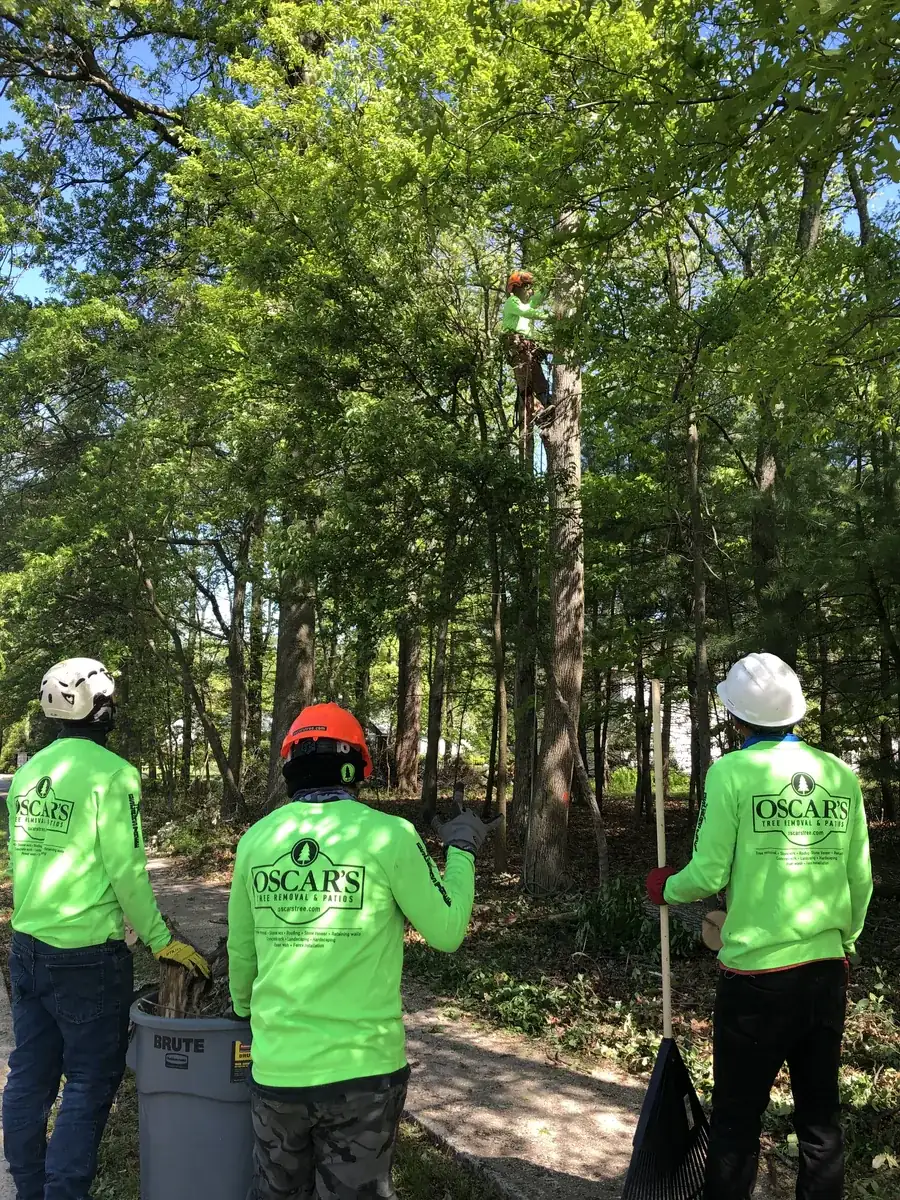
Every timing rule above applies to healthy, routine pruning. When a limb is dead, cracked, hanging, or threatening your home, power lines, or family, it should come down immediately regardless of the calendar. Pennsylvania storms, heavy snow, and ice loads snap branches every year. If you have a limb that worries you, do not wait for the "right" season. Our crew handles storm and emergency tree work 24/7, and for tough or tight-access removals we bring crane and spider lift equipment so the job gets done without tearing up your yard.
Why Timing and Technique Both Matter
Correct timing only helps if the cuts themselves are done right. Bad pruning, like topping a tree or leaving ragged stubs, causes long-term damage no matter the season. Proper cuts are made just outside the branch collar so the tree can seal the wound naturally. Over-thinning, removing too much of the canopy at once, stresses the tree and invites sunscald and weak regrowth. A good rule is to never remove more than about a quarter of a tree's living canopy in a single year.
This is where experience pays off. Our team has completed more than 1,000 jobs across Bucks County and the Lehigh Valley since 2016, and we know how our local species respond to pruning through every season. If you would rather not guess, professional tree trimming and pruning takes the timing question off your plate entirely.
Serving Bucks County and the Lehigh Valley
Oscar's Tree Removal & Stone Veneer is a family-owned company based in Perkasie and Dublin, serving Doylestown, Quakertown, Souderton, Lansdale, Bethlehem, Allentown, and the surrounding towns. We are licensed, insured, and bilingual, with 240+ five-star Google reviews. Everything outside, one crew, no subcontractors, so the same experienced specialists show up every time. Whether you need a single limb reduced or a full property cleared, we can help you get the timing and the work right. If you are weighing a full removal instead of a trim, our guide to tree removal cost in Bucks County breaks down what to expect, and you can always request a free, same-day estimate with no obligation.
Frequently Asked Questions
Get a Free Tree Trimming Estimate
Free, same-day, in-person estimates with no obligation. Call or text and Oscar takes a look himself.