Stone Veneer Ideas & Types for Your Home
Stone veneer is a thin stone facing used on exterior facades, fireplaces, accent walls, columns, and outdoor kitchens. It comes in two main forms: manufactured (cultured) stone and natural thin stone veneer, with popular natural options in Bucks County including Pennsylvania fieldstone, limestone, and bluestone.
Stone veneer is one of the most popular ways to add character and lasting value to a home in Bucks County. It gives you the look of full stone masonry at a fraction of the weight and cost, and it works almost anywhere: on the front of your house, around a fireplace, up a column, or along a garden wall. If you are exploring your options, here are the best ideas and a clear breakdown of the stone types so you can picture what fits your home.
Popular Stone Veneer Ideas for Your Home
Stone veneer is flexible enough to use in one small spot or across an entire elevation. These are the applications we install most often for homeowners across Bucks County and the Lehigh Valley.
Exterior Facades and Accents
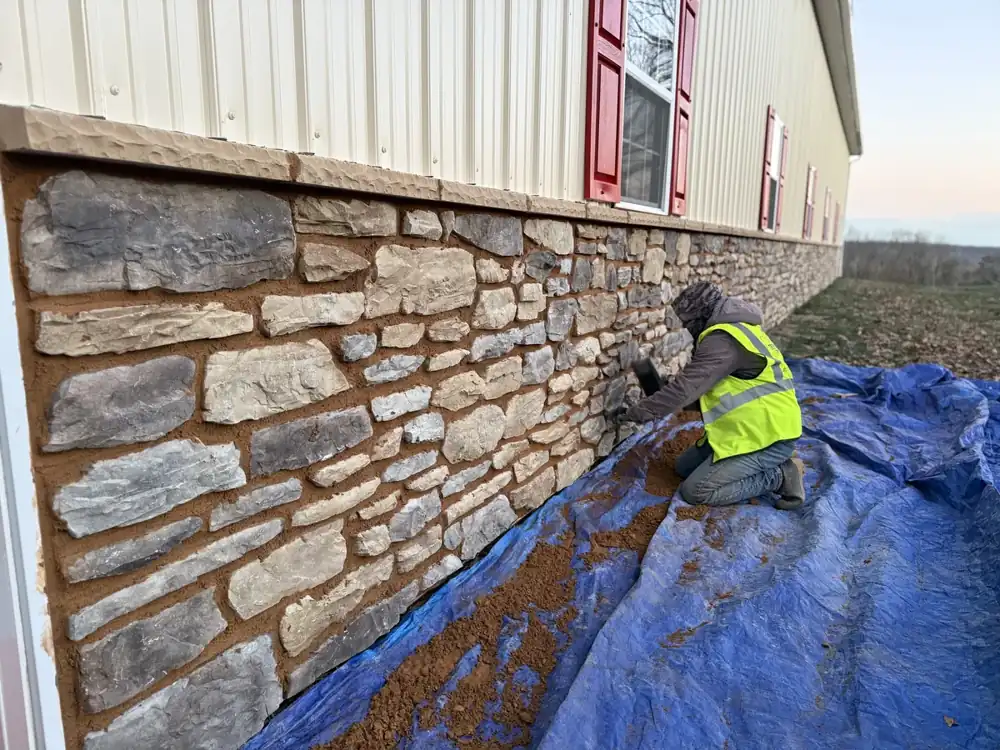
A full or partial stone facade is the single biggest upgrade you can make to your curb appeal. Many Bucks County homeowners choose a full fieldstone front for a classic farmhouse or colonial look, while others use stone on just the lower third of the house, around the entryway, or as a water table to break up siding. Wainscoting the front porch base in stone is a simple, high-impact option that fits the traditional architecture common in our area.
Fireplaces and Indoor Accent Walls
Fireplaces are where stone veneer really shines indoors. A floor-to-ceiling stone surround becomes the focal point of a living room, and the same material can wrap a hearth or a wood-stove alcove. Beyond the fireplace, an interior accent wall in a dining room, stairwell, or basement bar adds texture that paint and wallpaper cannot match. See our stone veneer fireplace surrounds for indoor ideas, and browse finished projects in our project gallery.
Columns, Chimneys, and Entryways
Wrapping porch columns or the base of tapered pillars in stone instantly elevates an entryway. Chimneys are another common project: refacing a plain or aging chimney in stone veneer ties it back to the rest of the house and hides weathered brick or stucco. These vertical accents are a favorite because they deliver a big visual change for a modest amount of material.
Outdoor Kitchens and Living Spaces
Stone veneer is a natural fit for outdoor kitchens, built-in grill surrounds, and bar islands. It stands up to heat and weather, and it visually connects the cooking area to a stone patio or fire pit. If you are building an outdoor entertaining space, veneer on the island base with a bluestone or natural stone cap creates a cohesive, upscale look.
Retaining Walls, Steps, and Columns
Function and looks come together in hardscaping. Stone-faced retaining walls hold back grade while framing a yard, stone steps welcome guests to the front door, and pillar caps or mailbox columns finish the property line. These features take a beating from our Pennsylvania weather, so material choice and proper installation matter as much as the design.
Manufactured vs. Natural Stone Veneer
Every project starts with one decision: manufactured stone or natural stone. Both look great when installed well, but they behave differently. We install both and will walk you through the trade-offs in a free, in-person estimate.
Manufactured (Cultured) Stone
Manufactured stone, also called cultured stone, is molded from lightweight concrete and colored to mimic natural stone. Its advantages are cost, consistency, and weight. It is more affordable than natural stone, every piece is uniform and easy to plan around, and it is light enough to install over more surfaces. The trade-off is that the color is applied rather than running all the way through, and it can fade slightly over many years of sun exposure. For most exterior facades and accent walls on a budget, manufactured stone is an excellent choice.
Natural Thin Stone Veneer
Natural thin stone veneer is real stone cut to roughly one inch thick so it installs like a veneer while looking exactly like full masonry, because it is. The color and texture are genuine and never fade, no two pieces are identical, and it holds up beautifully to freeze-thaw cycles when installed correctly. It costs more than manufactured stone and is heavier, but for a forever home or a historic-style property in Bucks County, nothing matches the depth and authenticity of real stone.
| Stone Type | Look | Best For | Notes |
|---|---|---|---|
| Manufactured (cultured) | Uniform, wide range of styles | Budget facades, accent walls | Lightweight, consistent, color can fade over time |
| Pennsylvania fieldstone | Rounded, earthy, rustic | Farmhouse and colonial facades, chimneys | Authentic local look, excellent durability |
| Limestone | Clean, light, refined | Formal facades, entryways, columns | Softer tones, timeless and versatile |
| Bluestone | Blue-gray, dense, crisp | Caps, steps, patios, accents | Extremely hard, ideal for treads and wall caps |
Natural Stone Types and Where They Work Best
If you go the natural route, the specific stone sets the tone of the whole project. Here are the three we work with most in this region.
Pennsylvania Fieldstone
Pennsylvania fieldstone is the signature look of our area. Its rounded, earthy shapes and mixed browns, grays, and tans are exactly what people picture when they think of a Bucks County farmhouse or colonial. It is the natural choice for a facade or chimney meant to look like it has always been there, and it stands up to our freeze-thaw winters extremely well.
Limestone
Limestone brings a lighter, cleaner, more refined feel. Its soft grays, tans, and creams suit formal facades, entryways, and columns where you want elegance rather than rugged texture. It is a timeless, versatile option that pairs well with both traditional and transitional home styles.
Bluestone
Bluestone is the dense, blue-gray Pennsylvania stone prized for its hardness. Rather than a full facade, it is most often used as a finishing element: wall caps, pillar caps, step treads, hearths, and patio surfaces. Its strength makes it ideal anywhere a surface takes foot traffic or weather, and its crisp color is a striking accent against warmer stone.
Choosing the Right Stone for Your Home
The best material depends on your home's style, your budget, and where the stone is going. A rustic farmhouse leans toward fieldstone; a formal colonial may call for limestone; a patio or set of steps wants bluestone; and a budget-conscious facade is often best served by quality manufactured stone. Durability matters too, since anything installed here has to survive years of freeze-thaw cycles, which is why correct installation is just as important as the stone you pick.
If you are weighing the investment, our stone veneer cost guide for Bucks County breaks down what to expect, and our stone veneer vs. brick vs. stucco comparison can help if you are still deciding on a material altogether. To see the full range of what we install, visit our stone veneer services page. And if you have existing stonework that needs attention, we also offer stone repair and repointing.
Oscar's Tree Removal & Stone Veneer has been a family-owned business since 2016, with over 1,000 completed jobs, 239-plus five-star Google reviews, and a 10-year warranty on our stone veneer installations. The same crew does every job with no subcontractors, and we are licensed, insured, and bilingual. When you are ready to talk through ideas for your home, reach out for a free in-person estimate or call or text us at (267) 245-5320.
Frequently Asked Questions
Get a Free Stone Veneer Estimate
Free, same-day, in-person estimates with no obligation. Call or text and Oscar takes a look himself.