Stone Accent Walls & TV Walls in Bucks County, PA
Ledgestone behind the TV, fieldstone in the foyer, a stacked-stone wall behind the bed. We install interior stone veneer on the walls people actually look at, built on the right backing so it stays put.
What a Stone Accent Wall Is, and What It Takes
A stone accent wall is one interior wall finished in stone veneer while the rest of the room stays painted drywall. It might be the wall your TV hangs on, the first wall you see from the front door, the wall behind a headboard, or the long wall that runs up a staircase. One wall of stone gives a room a focal point without turning the whole space into a stone box.
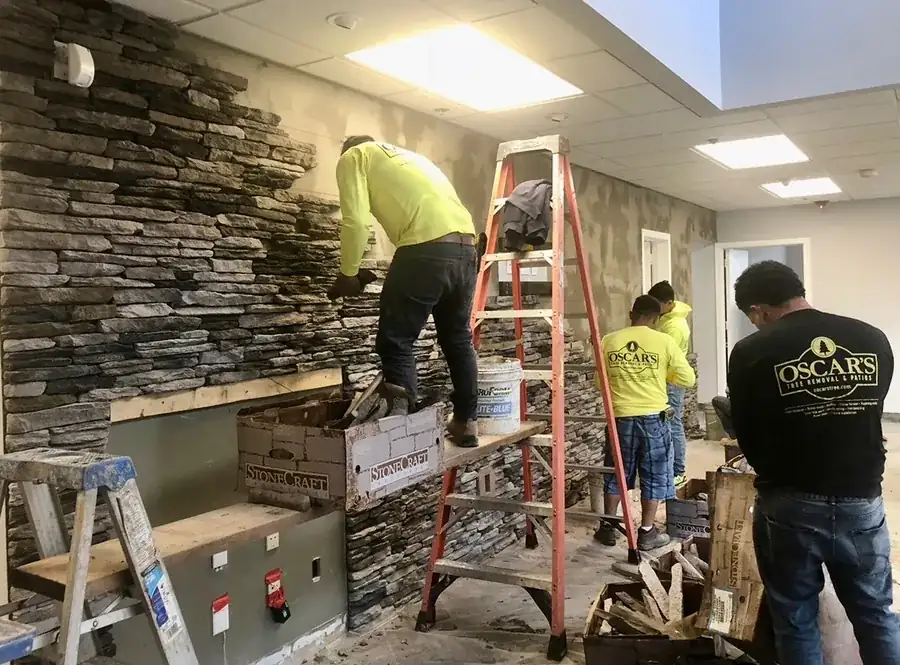
The part most people do not see is what sits behind the stone. Interior stone veneer is not a peel-and-stick product. Real stone and manufactured stone are both set in mortar, and that mortar needs something it can grip: metal lath fastened into the studs, cement board, or bare masonry. Getting that backing right, and planning the outlets, TV mount and edges before the first stone goes on, is most of the job.
Below: how interior accent walls are built, which stone suits which room, how a TV wall is planned, and what cost guides say. Or call (267) 245-5320 and we will come look at the wall.
The Rooms Where a Stone Accent Wall Earns Its Place
A stone wall works best where the eye already goes. Each location changes what we plan for.
Living Room TV Wall
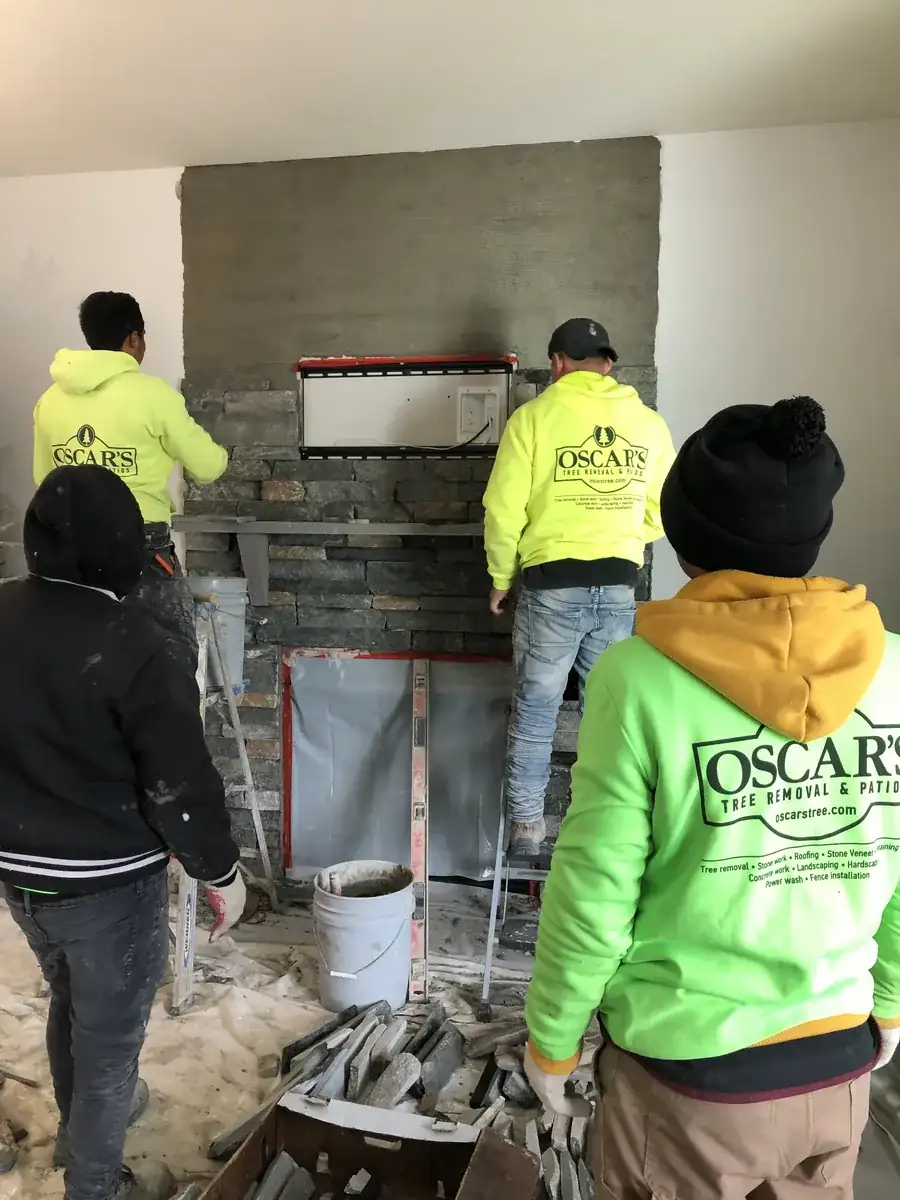
The most requested accent wall: ledgestone or stacked stone behind a wall-mounted TV. Mount, power and cable path get planned before stone goes up.
Entry or Foyer Wall
The first thing guests see. Two-story foyers in newer homes mean scaffolding, more corner pieces and a clear plan for where the stone stops.
Bedroom Headboard Wall
A softer ledgestone or tight ashlar behind the bed, sometimes only to a set height. Reading-light boxes and outlets need extensions to sit flush.
Stairwell Wall
Long, tall and seen from two floors. Stone has to run cleanly along the stringer, and handrail brackets need blocking behind it.
Dining Feature Wall
Fieldstone or ashlar behind a dining table or buffet. Lighting matters most here; a fixture close to the wall brings out texture.
Finished Basement or Bar
A stone wall around a bar or media area breaks up a lot of drywall. Bare foundation walls can take stone directly; framed walls need lath or cement board.
Building a Stone TV Wall: Mounts, Wiring and Outlets
A stone TV wall looks simple when it is done. The order of decisions matters, because once stone is set in mortar, moving a box or adding blocking means cutting stone out.
Decide where the TV goes first
Pick the TV size and mounting height before anything else. That sets where the mount bolts go, where the power and cable box sits, and whether you want the TV centered on the wall or on a fireplace below it.
Blocking behind the mount
The TV mount should never rely on the stone. It has to bolt into wood framing behind it. If the wall is open, horizontal blocking between the studs at mount height puts solid wood exactly where the bolts go. The mount then fastens through the stone and backing with longer fasteners sized for the added depth.
Power and cables
Most people want no visible cords. That usually means a recessed power and low-voltage box behind the TV and a conduit or in-wall pass-through down to the media equipment. That is electrician territory, and it has to happen before stone goes on. We plan the stone layout around whatever the electrician installs.
Outlets and switches
Stone and its mortar bed add depth, so every existing box on the wall has to come forward. Cultured Stone's installation instructions call for a UL-listed extension box on the existing electrical box, with the stone cut and fitted around it. Planning these early lets us lay out courses so a box lands cleanly instead of in the middle of a sliver of stone.
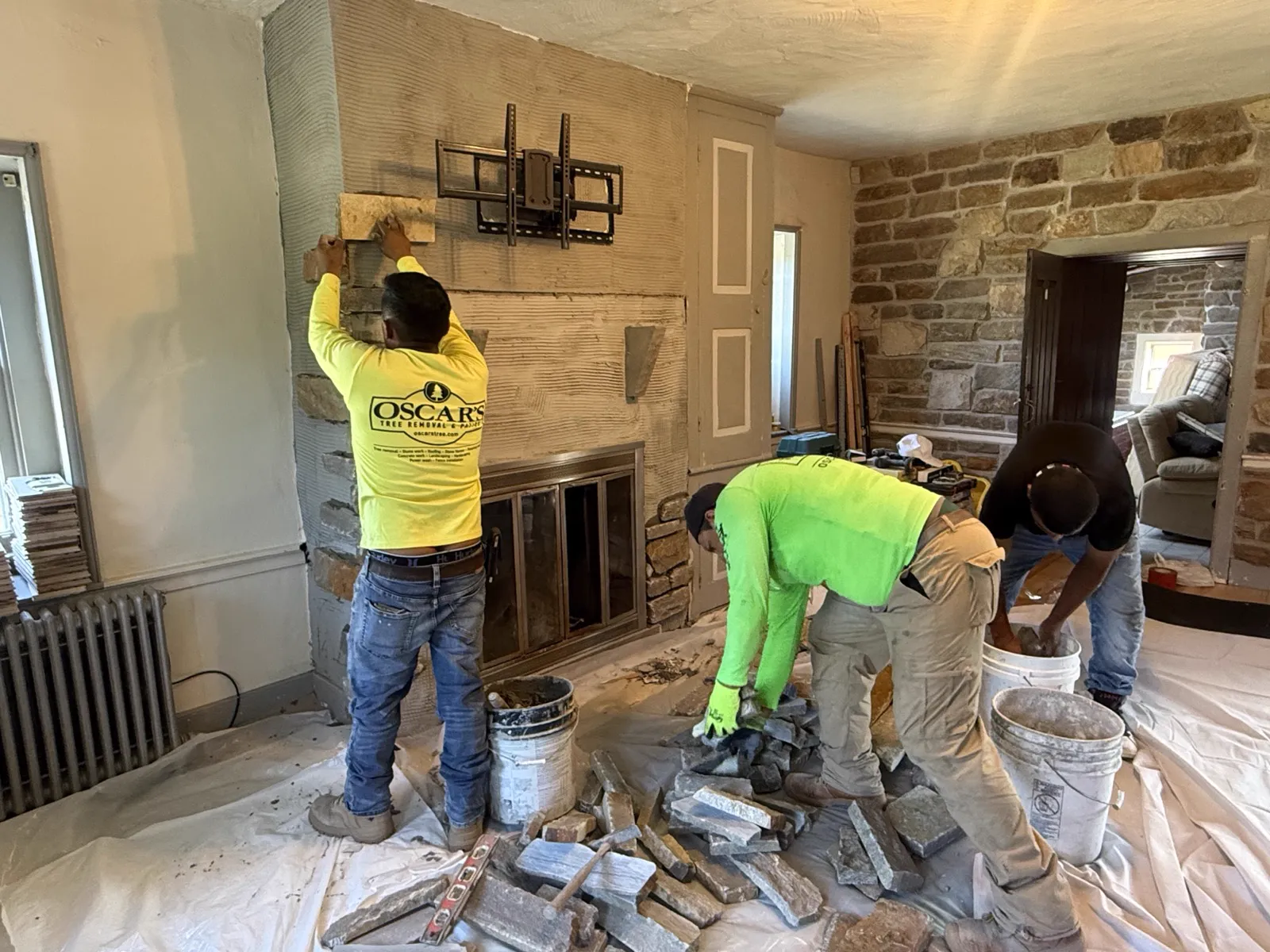
Stone around a firebox adds clearance rules from the fireplace manufacturer. See our stone fireplace surrounds page and our fireplace refacing page for that side of the project.
How an Interior Stone Wall Goes Up
Stone manufacturers publish installation instructions that are specific about what their stone can be set over. We follow the instructions for the product you choose. Here is what they generally call for indoors.
| Existing wall | What the stone gets set on | Notes |
|---|---|---|
| Drywall over wood studs | Metal lath fastened through the drywall into the studs, then mortar (scratch coat and setting bed) | ProVia's guide lists gypsum board over interior studs at a maximum of 16 inches on center, with corrosion-resistant lath fasteners penetrating at least 3/4 inch into wood framing. |
| Cement board over studs | Stone set directly into polymer-modified mortar | ProVia lists no lath or water-resistive barrier needed over cement board indoors, using ANSI A118.4 or A118.15 mortar. Cultured Stone also calls for modified mortar on cement board. |
| Bare block, brick or poured concrete | Mortar applied directly to clean, unpainted masonry | Common on basement foundation walls. Paint, sealers or residue must come off first. |
| Painted or sealed masonry | Surface prep, or lath and scratch coat over it | Both manufacturers warn that paint, stains and sealers are bond breakers. |
Sources: ProVia Stone Installation Guide; Cultured Stone Installation Instructions (2021). Always confirm against the current instructions for the specific stone being installed.
Check the wall and framing
We look at what the wall is made of, the stud spacing, and whether it is flat and plumb. Adhered veneer is capped by the masonry code at 15 pounds per square foot, and ProVia notes non-load-bearing walls may need alterations, with an engineer consulted.
Prepare the backing
Over drywall, that means lath fastened into the studs and a scratch coat of mortar troweled into it and scored. Cultured Stone's 2021 table lists interior installations with one layer of water-resistive barrier and lath, with the scratch coat marked optional. Over cement board, the stone goes straight into modified mortar.
Lay out and set the stone
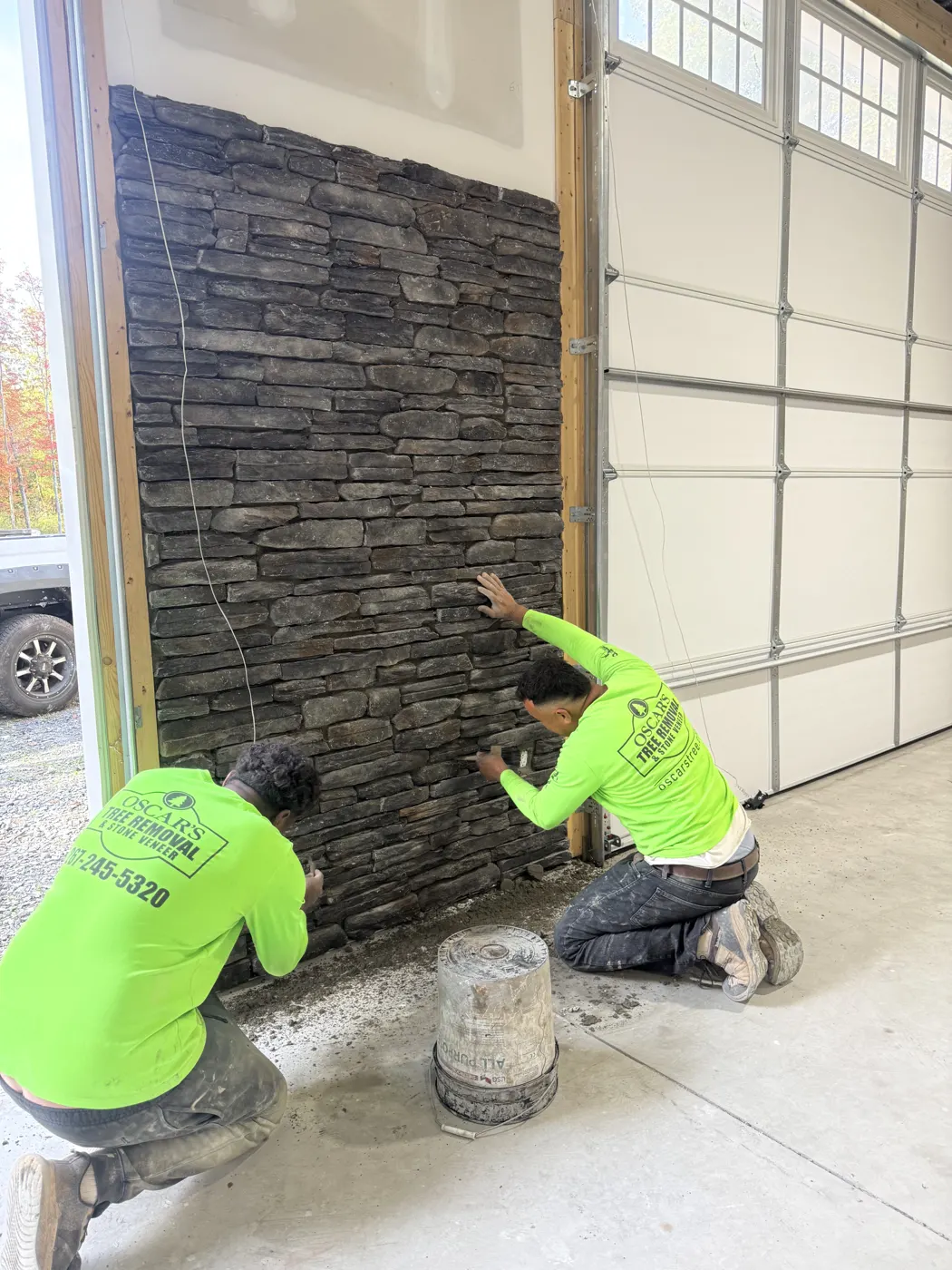
Stone is spread out so sizes and colors mix across the wall. Corner pieces go first, alternating long and short legs; Cultured Stone notes ledgestone goes on from the bottom up. Each stone gets a full mortar bed.
Joint, tool and clean
Grouted walls get joints filled with a grout bag and tooled once thumbprint-hard. Smears come off with a dry brush once crumbly, never a wet sponge or wire brush.
Choosing a Stone Style for an Accent Wall
The profile matters more than the color. It sets how modern or rustic the wall reads and how much shadow it throws. These are the profiles we are asked about most for interior walls; for more comparisons, see our guide to stone veneer types and ideas.
Ledgestone and stacked stone
Long, thin pieces laid in horizontal courses. The deep shadow lines make it the standard choice for TV walls and modern living rooms. Gray and charcoal tones read contemporary; buff and tan read warmer. Because the pattern is so linear, the wall has to be straight and level or every course shows it.
Fieldstone
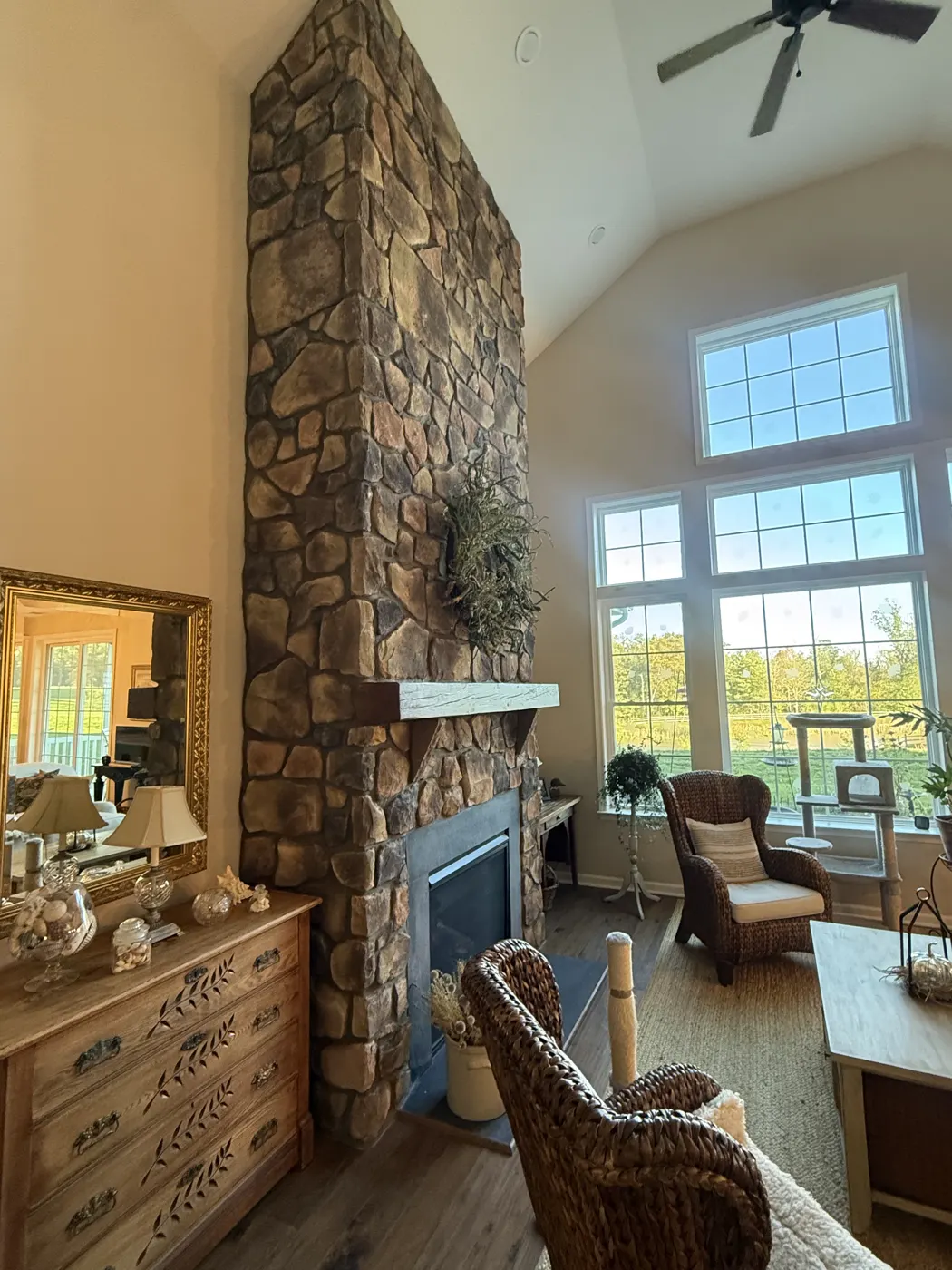
Irregular, rounded-edge stones in mixed sizes, set with visible mortar joints. Fieldstone is the look of the old stone farmhouses and bank barns found across Bucks County, so it fits colonial and farmhouse interiors well, especially in a dining room or around a hearth.
Ashlar and cut stone
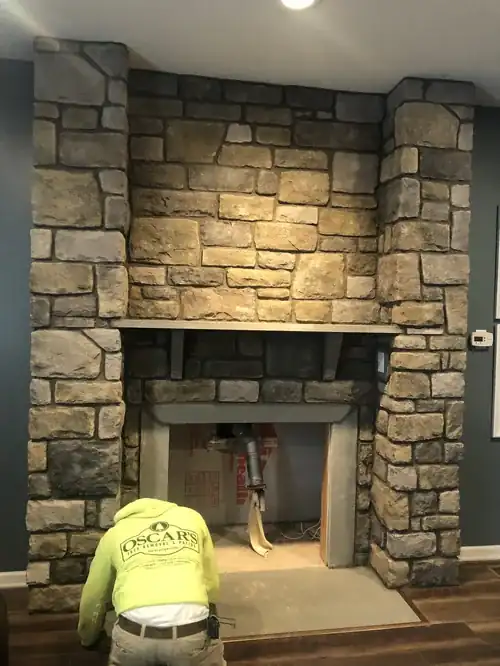
Squared and rectangular stones in a coursed or random pattern. Ashlar sits between rustic and formal and works in entryways, dining rooms and traditional living rooms where fieldstone would feel too busy.
River rock
Smooth, rounded stones set with wider joints. Strong on a small wall, bar front or wainscot; heavy across a large wall.
Natural Thin Stone Veneer
Real quarried stone sawn thin enough to adhere to a wall. Every piece is different and it usually costs more. Good for matching existing stone in an older home.
Manufactured Stone Veneer
Cast concrete made to look like stone, in many colors and profiles, with matching corner pieces for clean returns. The most common choice for TV walls and newer homes.
Thinking about stone on more than one wall? Our interior stone veneer page covers kitchens, columns, half walls and other indoor applications.
Dry-Stack vs. Grouted Joints
Joint style changes the feel of the same stone more than people expect.
Dry-stack (tight-fit)
Stones are fitted tightly with little or no visible mortar between them, the clean look most people picture for a stacked-stone TV wall. The name is misleading: ProVia's guide says the entire back of each stone still has to be set in mortar. Tight-fit installs also use more stone, since no joints take up space.
Grouted
Stones are set with a mortar joint that is then filled and tooled. Cultured Stone recommends keeping joints as narrow as possible, averaging no more than 1/2 inch. Fieldstone, river rock and many ashlar patterns are designed to be grouted. Joint depth matters: a raked-back joint keeps shadows around each stone, while a full joint reads more like a traditional mortared wall.
Mortar color
Mortar can be tinted to suit the stone. Cultured Stone's example is tan mortar with earth-tone stone. Gray mortar with gray ledgestone hides the joints; a lighter mortar with fieldstone makes each stone stand out. It is worth seeing the mortar color next to the actual stone before committing.
Design Details That Make or Break an Accent Wall
Most accent walls that look off share the same few problems, all avoidable with planning.
- Where the stone stops. Decide whether the stone runs to the ceiling or stops at a set height, and whether it wraps the exposed end of the wall. Manufactured corner pieces let the stone turn the corner so you never see a cut edge.
- Depth at the edges. Stone adds depth to the wall. Where it meets a door casing, window trim or a side wall, that extra thickness needs a planned edge, such as a corner return or trim piece.
- Baseboard and ceiling. Stone usually starts at the floor with no baseboard and stops at the ceiling or a crown line; a strip of drywall left at the top looks unfinished.
- Scale. Large stones on a small headboard wall can look crowded. Smaller ledgestone or ashlar suits short walls; bigger fieldstone suits tall great-room walls.
- Pattern breaks. ProVia's guide suggests breaking up horizontal lines roughly every 6 feet so the wall does not show long continuous joints.
- Lighting. Light coming straight on flattens stone. A fixture mounted close to the wall and aimed across the face (grazing light) brings out the shadow lines. Plan sconces or LED channels before stone goes up, since they need wiring behind it.
What a Stone Accent Wall Costs
National cost guides give a useful starting point. According to HomeGuide's 2026 brick and stone wall cost guide, an interior stone accent wall costs $10 to $45 per square foot, or $1,000 to $4,500 for 100 square feet of wall surface, covering manufactured, faux and natural stone veneers with materials and installation included.
Where a specific wall lands in that range comes down to a handful of things:
- Stone type. Natural thin veneer usually costs more than manufactured stone, and some profiles are more expensive than others.
- Backing. A wall that needs lath and a scratch coat, or new cement board, takes more labor than bare masonry.
- Openings and boxes. Every outlet, switch, window and corner means cut stone and corner pieces.
- Height. Two-story foyers, stairwells and vaulted great rooms need scaffolding or staging.
- Joint style. Tight-fit dry-stack uses more stone per square foot than grouted work.
A real number comes from seeing your wall, its backing and what is on it, so we give a written estimate after an in-person visit. For more on local pricing factors, read our stone veneer cost guide for Bucks County.
Caring for an Interior Stone Wall
An indoor stone wall does not deal with rain or freeze/thaw, so upkeep is light. Most of it is dust.
- Routine dusting. A soft brush or a vacuum with a brush attachment handles the ledges on ledgestone, which collect dust.
- Cleaning. Cultured Stone's instructions call for granulated soap or detergent in water, a bristle brush, and an immediate fresh-water rinse. No wire brushes, no acid or acid-based cleaners, no pressure washing.
- White haze. That is efflorescence, salts left as moisture leaves masonry. Cultured Stone recommends scrubbing the dry wall with a stiff bristle brush and water, and for stubborn cases 1 part white vinegar to 5 parts water, rinsed well.
- Sealer. Not required on manufactured stone, per Cultured Stone and ProVia. If you want one near a bar or fireplace, use a breathable silane or siloxane sealer and test it first, since it can darken stone.
- Loose stones or cracked joints. Indoors these are rare and usually point to a backing problem. Our stone veneer repair and repointing page covers how that gets fixed.
Stone Accent Walls Across Bucks & Montgomery County
We are based in Perkasie and work throughout Bucks County, Montgomery County and the Lehigh Valley. In older colonials and farmhouses around Doylestown and the upper Bucks townships, the goal is usually a fieldstone or ashlar wall that looks like it belongs to the house. Newer construction in Montgomery County, around Lansdale and the North Penn area, tends to have open great rooms and two-story foyers, where a ledgestone TV wall or entry wall is the common request. Finished basements across both counties are another frequent spot for a stone bar or media wall.
Stone Accent Wall FAQs
Can stone veneer be installed over drywall?
Yes, but not stuck straight to the paper face. Over drywall, manufacturer instructions call for metal lath fastened through the drywall into the studs, with mortar worked into the lath. ProVia's guide accepts gypsum board over interior studs spaced no more than 16 inches apart with approved lath. The other common route is cement board, which takes the stone with polymer-modified mortar and no lath.
How do you mount a TV on a stone accent wall?
The mount fastens into wood behind the stone, never into the stone itself. The cleanest way is to pick the TV location before stone goes up, add blocking between the studs at mount height, and have power and a cable conduit run to a recessed box behind the TV. The mount then bolts through the stone into that blocking with longer fasteners.
What is the difference between ledgestone and stacked stone?
They are the same family: long, thin pieces laid in horizontal courses with strong shadow lines. Ledgestone is the broader name and can be set with tight or slightly recessed joints. Stacked stone usually means the tight-fit version with little or no visible mortar. Both are common picks for TV walls.
Is a dry-stack look a good idea indoors?
Indoors is where it makes the most sense. ProVia advises against dry-stack where freeze/thaw is common, which is an outdoor concern. Dry-stack still needs a full mortar bed on the back of every stone, and tight-fit walls use more stone per square foot than grouted ones.
How much does a stone accent wall cost?
HomeGuide's 2026 guide puts an interior stone accent wall at $10 to $45 per square foot, or $1,000 to $4,500 for 100 square feet of wall, covering manufactured, faux and natural veneer. Your wall depends on the stone, its size, its outlets, corners and openings, and whether it needs new backing. We give a written estimate after seeing the wall.
Will my wall hold the weight of stone?
Adhered stone veneer is limited by the masonry code to 15 pounds per square foot, and interior veneer products are made to stay under that. The bigger question is the wall: its framing, stud spacing and what is behind the drywall. ProVia notes non-load-bearing walls may need alterations and recommends an engineer in those cases. We check the framing during the estimate visit.
Do outlets and switches have to move for a stone wall?
Usually they stay put but come forward, since stone and mortar add depth. Cultured Stone's instructions call for a UL-listed extension box on the existing box, with stone fitted around it. Moving an outlet, for example behind a wall-mounted TV, is an electrician's job and should happen before the stone goes up.
Should I use natural thin stone or manufactured stone for an accent wall?
Both work indoors. Natural thin veneer is real quarried stone sawn thin, with natural color and texture, and usually costs more. Manufactured stone is cast concrete made to look like stone, offers many colors and profiles, and has matching corner pieces for clean edges. Manufactured ledgestone is the common TV-wall pick; natural fieldstone often suits an older farmhouse better.
How do I clean an interior stone wall?
Dust it with a soft brush or vacuum attachment. For dirt, Cultured Stone's instructions call for soap or detergent in water, a bristle brush and a fresh-water rinse. Skip wire brushes, acid-based cleaners and pressure washers. A sealer is not required on manufactured stone; if you use one, choose a breathable silane or siloxane sealer and test it first.
Have a Wall in Mind?
Tell us which wall, roughly how big it is, and what is on it now. We will come out, check the framing and backing, bring stone samples, and give you a written scope and price.
Tell Us About Your Wall
Which room, how tall and wide the wall is, and whether a TV or fireplace is involved. A photo helps. We will follow up to set up a visit and a written estimate before any work starts.